
Paving Ipswich
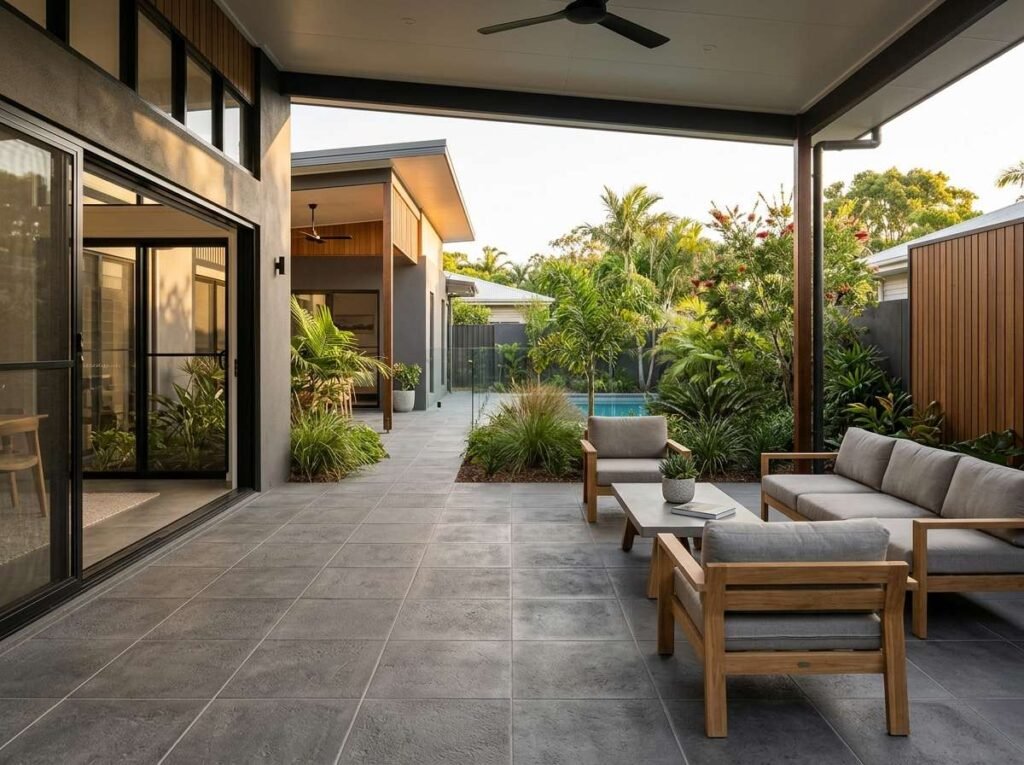
Paving ties a yard together: a driveway that doesn’t crack, a path down the side of the house, a patio off the alfresco or a pool surround that’s safe underfoot. We lay paving across Ipswich, and because so much of the area is clay, we put most of the effort into the base so the pavers stay flat.
- Free Quotes
- Driveways, Paths and Pools
- Concrete and Natural Stone
- Base Built for Clay
What we pave
Driveways
Pavers instead of plain concrete, or extending an existing driveway, built on a deeper base for car loads.
Paths and side access
Bin paths, garden paths and side passages that stay dry and level.
Patios and alfresco extensions
Extending the slab out into the yard for outdoor dining and entertaining. For patios with a pergola or shade, see our patios and pergolas page.
Pool surrounds
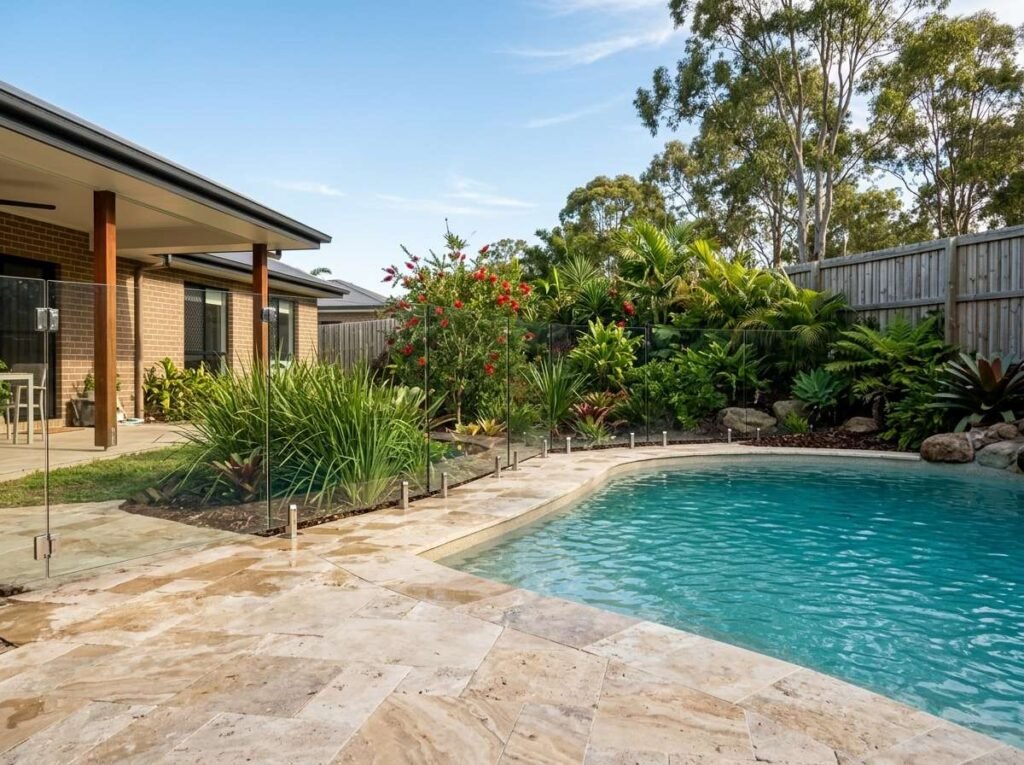
Non-slip pavers suited to salt and chlorine. Pool fencing has to stay compliant during and after the work.
Choosing pavers
Concrete pavers are the most popular: affordable, consistent and available in plenty of colours and sizes. Natural stone such as travertine, sandstone or granite costs more but looks premium and suits pools and entertaining areas. Clay brick pavers suit older Queenslanders and character homes. Permeable pavers let rainwater soak through, which helps on yards where runoff is a problem.
Why paving sinks on clay, and how we stop it
Pavers sink or lift when the ground under them moves or gets wet. On Ipswich clay, the fix is a dug-out and compacted crushed rock base, a level bedding layer, a solid edge restraint so the pavers can’t spread, and a fall that carries water away from the house. Driveways get a deeper base than paths. Skipping any of these is why so many older paved areas are uneven.
Approvals and council
Ground-level paving doesn’t usually need building approval, but a new or wider driveway crossover onto the street does need council approval, and paving shouldn’t send stormwater onto your neighbour’s land. Paving jobs over $3,300 also need a QBCC-licensed contractor. We’ll flag anything that applies at the quote.
What affects the cost of paving
The area, the paver you choose, how much digging and base is needed, access, cutting around curves and edges, and removing old concrete or pavers first. Driveways cost more per square metre than paths because of the deeper base. You’ll get an itemised quote after a site visit.
Paving FAQs
How soon can I use new paving?
You can usually walk on sand-set paving straight away once the joints are filled and compacted. For driveways, we’ll tell you when it’s ready for cars.
Can you pave over existing concrete?
Sometimes, if the slab is sound and the extra height won’t cause problems at doors or drainage. Cracked or sinking concrete is better removed first.
Should pavers be sealed?
Sealing helps resist stains around barbecues and pools and makes cleaning easier. It isn’t essential, and it needs redoing every few years.
Get a free paving quote
Call (07) 3485 0099 for a free paving quote, or send us a few details about the area through the form.
Request your free landscaping quote
By sending this form you agree to us passing your details to a local landscaper so they can contact you about your quote. See our Privacy Policy.